New Quotations |

New entries: Quotes recently added to Best-Quotations.
 | I tried to love you less.I couldn’t. |
 | Congress no longer declares war or makes budgets. So that’s the end of the constitution as a working machine. |
| The more money an American accumulates, the less interesting he becomes. |
 | Buddhism, like Christianity, won its greatest triumphs outside the land of its birth; and it won them without shedding a drop of blood. |
| The Greek names for the metals and the constellations, for weights and measures, for musical instruments and many drugs, are translations, sometimes mere transliterations, of Babylonian names. |
 | A man is like a fraction whose numerator is what he is and whose denominator is what he thinks of himself. The larger the denominator, the smaller the fraction. |
| Everyone thinks of changing the world, but no one thinks of changing himself. |
| Boredom: the desire for desires. |
| All happy families are alike; each unhappy family is unhappy in its own way. — Leo Tolstoy, 1828–1910, Russian writer (the first phrase in “Anna Karenina”) |
| Have a goal for your whole life, a goal for a part of your life, and a goal for each year. A goal for each month, a goal for each week, a goal for each day, a goal for each hour, and each minute. And sacrifice the smaller goal for the bigger one. |
| If you feel pain, you are alive, but if you feel the pain of others, you are human. |
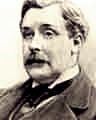 | A woman is God’s greatest masterpiece, especially when she has the devil in her body. |
 | The voice is what most resembles the soul. |
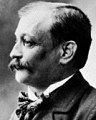 | A woman never sees what we do for her, she only sees what we don't do. |
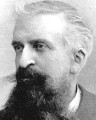 | Crowds are somewhat like the sphinx of ancient fable: It is necessary to arrive at a solution of the problems offered by their psychology or to resign ourselves to being devoured by them. |
| In group efforts there is a reckless tendency for consensus and collective misunderstanding of serious issues, within a climate of cheerful camaraderie. |
| The true artist creates even when he copies. |
| Real wisdom is not the knowledge of everything, but the knowledge of which things in life are necessary, which are less necessary, and which are completely unnecessary to know. |
| Patience is waiting. Not passively waiting. That is laziness. But to keep going when the going is hard and slow – that is patience. The two most powerful warriors are patience and time. |
| What counts in making a happy marriage is not so much how compatible you are but how you deal with incompatibility. |
| Upon meeting, you’re judged by your clothes, upon parting you’re judged by your wits. |
| The kinder and the more thoughtful a person is, the more kindness he can find in other people. |
| Nothing is so necessary for a young man as the company of intelligent women. |
| Rest, nature, books, music...such is my idea of happiness. |
| Respect was invented to cover the empty place where love should be. |
| I have found that a story leaves a deeper impression when it is impossible to tell which side the author is on. |
| Wealth is a great sin in the eyes of God. Poverty is a great sin in the eyes of man. |
| All great literature is one of two stories: a man goes on a journey or a stranger comes to town. |
| Happiness is in your ability to love others. |
| There is no greatness where there is no simplicity, goodness and truth. |
| What a strange illusion it is to suppose that beauty is goodness. |
| A Gentleman is a man who will pay his gambling debts even when he knows he has been cheated. |
| Government is a group of people who harass the rest. |
| Three things characterize a wise man: First, he himself does what he advises others to do. Second, he does nothing that contradicts the truth. Third, he is patient with the weaknesses of others. |
| Never pay attention to those who speak ill of others and say good things about you. |
| When doing good to someone, don't forget to thank him. |
| Stinginess and studiousness have something in common: the more they save, the less they think they possess. |
| One of the most common temptations, which leads to serious trouble, is the temptation of the words: “Everyone does it that way.” |
| Dispel the thought that you have qualities that others don't have. |
| Don’t talk to me about your religion, let me see your religion in your actions. |
| Statistics have shown that mortality increases perceptibly in the military during wartime. |
| It's impossible to tell you my age. It changes all the time. |
| People who never laugh are not serious. |
| Every separation is a small death, but every death is a huge separation. |
| It’s better to be a cuckold than a widower. There are fewer bureaucratic procedures. |
| Shakespeare didn't actually exist. His plays were written by an unknown person who had the same name as him. |
| To change the world begins with changing oneself. |
| The meaning of life is to risk everything for love. |
| Being happy completely alone is absurd. |
| The only way to rule people is to suppress the truth. |
| How can you believe in God when you see His justice? |
| Alcohol is a slow death. But what do we care? We are not in a hurry. |
| To look stupid in the eyes of a fool is a highly aesthetic pleasure. |
| Women are such liars that no one can even believe the opposite of what they say. |
| It’s strange that some people commit crimes when there are so many legal ways to be dishonest. |
| Being a writer is the only profession where it's not considered ridiculous not to make money. |
| Man is the only male animal that beats his female. One could therefore conclude that man is the most brutal male, if woman were not, of all females, the most unbearable. |
| The role of the scholar is to destroy chimeras, that of the statesman is to make use of them. |
| The masses have never thirsted after truth. Whoever can supply them with illusions is easily their master; whoever attempts to destroy their illusions is always their victim. |
| All the civilizations we know have been created and directed by small intellectual aristocracies, never by people in the mass. The power of crowds is only to destroy. |
| One of the most constant characteristics of beliefs is their intolerance. The stronger the belief, the greater its intolerance. Men dominated by a certitude cannot tolerate those who do not accept it. |
| If atheism spread, it would become a religion as intolerable as the ancient ones. |
| The art of those who govern consists above all in the science of employing words. |
| Debase the character of soldiers and you will have nothing but the mobs of Xerxes. Exalt the character, and you will have the warriors of Alexander. |
| For many people, speaking precedes thinking. They only know what they are thinking after they have heard what they have said. |
| The weaker the government, the stronger the bureaucracy. |
| The sense of responsibility, which always controls individuals, is lost in a crowd. |
| To dominate people, it is easier to inflame their passions than to support their interests. |
| It is more valuable to understand than to learn. |
| The mob can only think in images and therefore can only be influenced by images. Only images can terrify or excite them and thus become motivations for action. |
| The thirst for equality is usually nothing more than an acceptable form of the desire to have inferiors, but not superiors. |
| Because pleasure is fleeting while desire is lasting, people are more often motivated by desire than by pleasure. |
| Let us leave to the false orators the vain speeches about pacifism, brotherhood and other illusions, which bring to mind the theological discussions of the Byzantines at the time when Muhammad invaded their walls. |
| There are countless people who never have an opinion different from that of their newspaper. |
| Public services are the place where employees who arrive late meet those who leave early on the stairs. |
| Man thinks in aphorisms. |
| Genius cannot be prudent. If it acts prudently, it will never be able to expand the sphere of human progress. |
| Ideas age faster than words. |
| Once you cross the limits, there are no more limits. |
| What is conceived well is expressed clearly. What we eat tastefully easily digested. |
| It is very hard to be in love with someone who no longer loves you, but it is far worse to be loved by someone with whom you are no longer in love. |
| If we had to tolerate in others everything we allow in ourselves, life would be unbearable. |
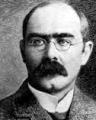 | A brave heart and a courteous tongue. They shall carry thee far through the jungle, Manling. |
| The jungle speaks to me because I know how to listen. |
| A woman’s guess is much more accurate than a man’s certainty. |
| If you want something and don’t get it, there are only two reasons. You either really didn’t want it, or you tried to bargain over the price. |
| A man can never have too much red wine, too many books, or too much ammunition. |
| We are the opening verse of the opening page of the chapter of endless possibilities. |
 | Nothing in excess. Μηδέν Άγαν. — Chilon of Sparta, 6th cent. BC, one of the 7 sages of Ancient Greece |
 | The happy are the free, and the free are the brave. Το εύδαιμον το ελεύθερον, το δ’ ελεύθερον το εύψυχον. |
 | Be neither naive nor nasty. Μήτε ευήθης ίσθι, μήτε κακοήθης. — Bias of Priene, 625-540 BC, one of the 7 sages of Ancient Greece |
| The strength of the city is the men, not the walls or the empty ships. Άνδρες πόλις και ου τείχη, ουδέ νήες ανδρών κεναί. |
 | Wind extinguishes fire, and familiarity extinguishes love. Το μεν πυρ ο άνεμος, τον δε έρωτα η συνήθεια εκκαίει. |
 | The one who loves becomes blind regarding the beloved. Τυφλούται ο φιλών περί το φιλούμενον. |
 | There is nothing greater or equal to love. Αγάπης δε ουδέν μείζον ούτε ίσον εστί. — Menander, 4th cent. BC, Ancient Greek dramatist (New Comedy) |
 | Small among the small, I shall be great among the great. Σμικρὸς εν σμικροίς, μέγας εν μεγάλοις έσομαι. |
 | Those who loved too much also hate too much. Οι πέρα στέρξαντες, οίδε και πέρα μισούσι. — Anonymous ancient tragedian |
| Long garments hinder the body; excessive wealth hinders the soul. Αι μεν ποδήρεις εσθήτες τα σώματα, αι δε υπέρμετροι περιουσίαι τας ψυχάς εμποδίζουσιν. |
 | Poetry is for an intelligent man or a madman. Ευφυούς η ποιητική εστιν ή μανικού. |
 | Asked when a man should approach a woman, he said: “When he wishes to become weaker.” Ερωτηθείς Πυθαγόρας πότε δει πλησιάζειν γυναικί, έφη: «ότε βούλεταί τις ασθενέστερος γίνεσθαι». |
 | While your houses are burning, you sing. Των οικιών υμών εμπιπραμένων, υμείς άδετε. |
| One should not value living with many possessions, but living well. Ου το ζην περί πλείστου ποιητέον, αλλά το ευ ζην. |
 | What we seek is attainable; what escapes us is what we don’t care about. Το δε ζητούμενον αλωτόν, εκφεύγειν δε ταμελούμενον. |
| Zeus utterly abhors boasting and big words. Ζευς γαρ μεγάλης γλώσσης κόμπους υπερεχθαίρει. |
| Do not speak praise about yourself. Υπέρ σεαυτού μη φράσης εγκώμιον. — Menander, 4th cent. BC, Ancient Greek dramatist (New Comedy) |
 | It is better to extinguish hubris than a fire. Ύβριν χρη σβεννύναι μάλλον ή πυρκαϊήν. |
| Arrogance is the enemy of wisdom. Αλαζονεία εμπόδιον σοφίας. — Bias of Priene, 625-540 BC, one of the 7 sages of Ancient Greece |
 | What is the first task of the knowledge seeker? To rid oneself of conceit, for you cannot learn what you think you already know. Τι πρώτον εστιν έργον του φιλοσοφούντος; αποβαλείν οίησιν· αμήχανον γαρ, ά τις ειδέναι οίεται ταύτα άρξασθαι μανθάνειν. |
| Heraclitus said that arrogance is an obstacle to progress. Ηράκλειτος έλεγε την οίησιν προκοπής εγκοπήν. |
 | Work is good, but idleness is bad. Το μεν εργάζεσθαι αγαθόν το δε αργείν κακόν. |
| It is impossible to be free if you are enslaved and dominated by your passions. Ελεύθερον αδύνατον είναι τον πάθεσι δουλεύοντα και υπό παθών κρατούμενον. |
 | Diogenes said that love is the pastime of the idle. Διογένης τον έρωτα είπε σχολαζόντων ασχολίαν. |
| Men must bear the fortunes that the gods have given them. Ανθρώποισι τας μεν εκ θεών τύχας δοθείσας έστ’ αναγκαίον φέρειν. |
| Be a loyal friend, and associate with loyal friends. Βέβαιος ίσθι και βεβαίοις χρώ φίλοις. |
| When Socrates was asked what possession is most beneficial, he said: “A true friend.” Σωκράτης ερωτηθείς τι κτήμα συμφορώτατον είπε: «φίλος βέβαιος». |
| Oh child, be silent; silence has many virtues. Ω παι σιώπα· πόλλ’ έχει σιγή καλά. |
| Ignorance with temperance is more beneficial than skill with immorality. Αμαθία τε μετά σωφροσύνης ωφελιμώτερον ή δεξιότης μετά ακολασίας. |
| There are four properties of the perfect virtue: wisdom, justice, courage, and prudence. Της τελείας αρετής είδη τέτταρα: έν μεν φρόνησις, έν δε δικαιοσύνη, άλλο δ’ ανδρεία, ταέταρτον σωφροσύνη. |
 | Test every word in your mind before speaking. Πάσαν γλώσσα βασάνιζε. |
 | Control your tongue, your stomach, your genitals. Γλώσσης, γαστρός, αιδοίων κρατείν. |